How Does a Dishwasher Work: A Complete Guide
Ever press “start” on your dishwasher and wonder what actually happens behind that closed door? It’s not just water spraying, it’s a carefully timed process designed to tackle everything from stuck-on food to everyday messes.
From filling and washing to filtering, rinsing and drying, your dishwasher moves through a series of steps to get your dishes clean. Understanding how each stage works can help you load smarter, pick the right cycle and keep your appliance running at its best.
How does a dishwasher clean dishes
A dishwasher cleans in stages, not with one long spray. Water enters the dishwasher tub, heats up, mixes with detergent and moves through a wash cycle that filters, drains, rinses and dries. These step-by-step details explain how a dishwasher works to clean your dishes and why proper loading, detergent use and routine care all shape the final result.
1. Water enters the dishwasher tub and heats
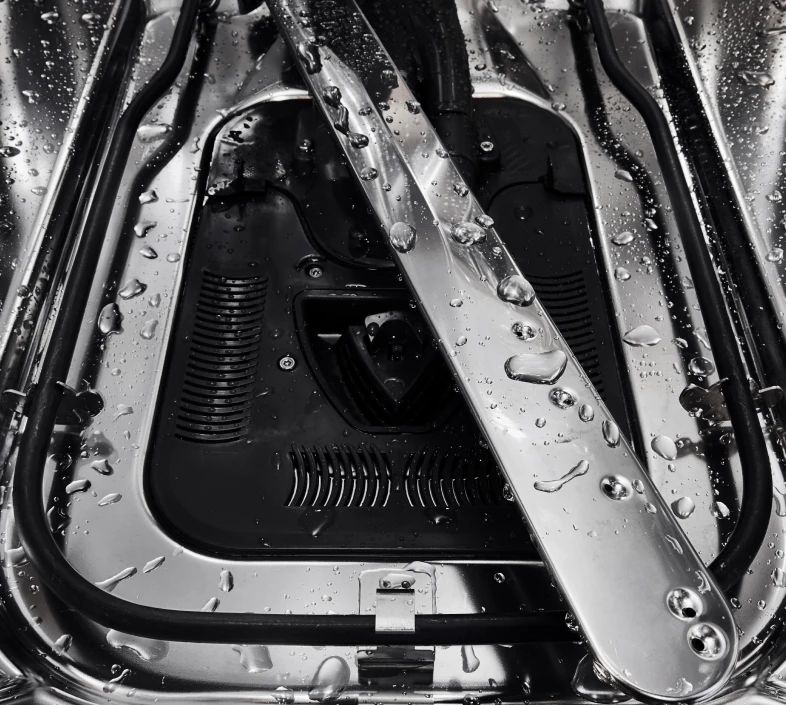
To begin a dishwasher cycle, the water inlet valve opens and allows water to flow into the bottom of the tub. The dishwasher continues to fill until the overfill protection float detects that the water is at an appropriate level. Once the correct amount of water has flowed in, the inlet valve will close.
Depending on your dishwasher model, your dishwasher heats the water with the heating element at the base of the appliance. Alternatively, your dishwasher may also source hot water from your faucet.
2. Detergent releases and the wash begins
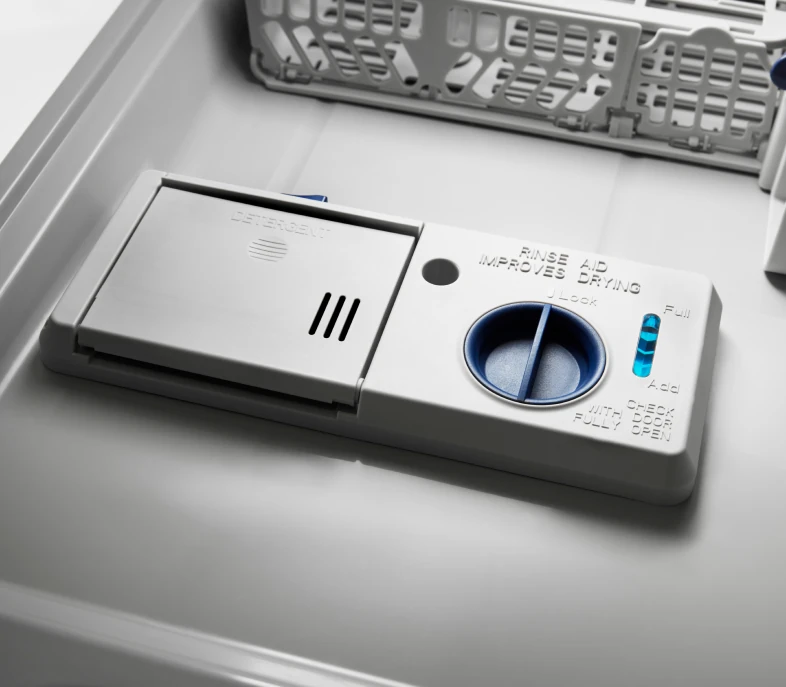
Once the water is hot enough, the detergent dispenser opens and detergent starts breaking down food residue. The hot water works to dissolve and activate the enzymes in your detergent to help ensure dishes get thoroughly clean. Make sure to always use the recommended amount of detergent for your load and water conditions.
In addition to detergent, you can also use rinse aid during your wash cycle. Dishwasher rinse aid is a liquid drying agent that’s added to your dishwasher to help dishes come out dry, spot-free and shiny. During the final rinse, your dishwasher releases rinse aid and it mixes with the rinse water. Rinse aid helps water “sheet off” dishes instead of clinging to them for a more efficient dry.
3. Spray arms circulate water across dishes
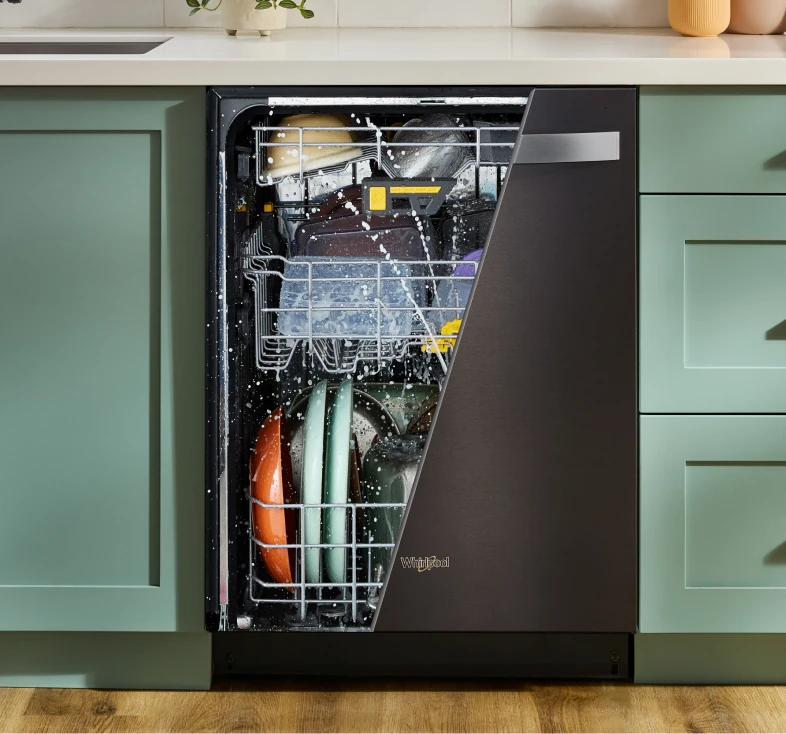
The circulation pump forces water through the spray arms, which spin and spray dishes from multiple angles. The water sprays in a steady stream all around your dishwasher as it works to eliminate left behind food particles and debris.
Some dishwasher models use a soil sensor to read how much residue is in the water during a wash cycle. That input can help the dishwasher adjust cycle length, water use or water temperature, so lighter loads and heavier messes get different treatment.
Tip: Load your dishwasher properly for optimal cleaning
Plates, pans or utensils that block the arms can interrupt water flow and leave food residue behind, so loading your dishwasher correctly matters as much as the cycle you choose.
4. Dirty water filters, drains and rinses to eliminate residue
During the rinse cycle, your dishwasher sprays clean water over the dishes to wash away any leftover detergent or residue. As food particles wash off and the wash cycle ends, dirty water and debris get filtered out through the bottom of your dishwasher tub and into your garbage disposal or your home’s waste system. Once everything is rinsed, the water drains out again through a hose, leaving your dishes fresh and ready for drying.
5. The dishwasher dries dishes
Some dishwashers use heat-based drying, while others rely on condensation drying after the final rinse.
After the rinse cycle is complete, the dishwasher’s heating element begins to raise the temperature of the air to dry your dishes. This rise in temperature helps evaporate leftover water and speed up the drying process.
Dishwasher care and maintenance tips
Regular care and maintenance help reduce residue, odors and hard water mineral buildup that can interfere with normal dishwasher performance. It also keeps key parts like the dishwasher filter, spray arms and dishwasher tub clear so water can move through each wash cycle as intended.
Follow the maintenance tips below to keep your appliance running smoothly:
- Clean the dishwasher filter regularly to clear trapped food particles.
- Check spray arms for blocked holes that may limit water flow during the wash cycle and final rinse.
- Wipe away interior residue on the door, gasket and dishwasher tub.
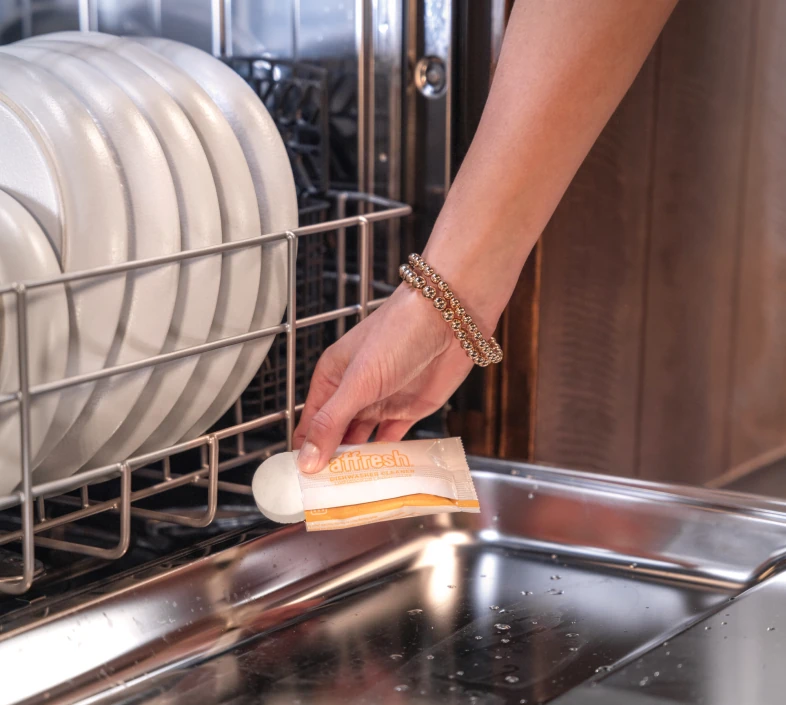
- Use dishwasher cleaner tablets monthly to help tackle buildup and freshen the interior.
Dishwasher FAQs
Still have questions about how your dishwasher works? You’re not alone. Use the questions below to get a better sense of what’s happening during a wash cycle and how simple, regular care can help keep your dishwasher running fresh and efficiently.
How much water does a dishwasher use?
Standard dishwashers typically use between 3-4 gallons of water per wash cycle. The exact number may vary based on the make and model of your appliance. Modern dishwashers are designed to be efficient and reuse and recirculate the same water.
Do dishwashers use hot or cold water?
Dishwashers use hot water to clean dirty dishes. Most modern dishwashers heat water with their own heating element. This enables the appliance to achieve the correct temperatures for different cycles and options.
Does a dishwasher reuse the same water?
Dishwashers typically do not keep using one batch of dirty water for the full cycle. Fresh water enters during the key parts of the wash cycle and final rinse, while food particles are filtered out and wastewater is pumped away through the drain pump.
How long does a typical dishwasher cycle take?
A typical dishwasher cycle can take about 1.5 to 4 hours, depending on the cycle and model. Longer cycles often allow more time for heating, sensing soil levels and rinsing dishes thoroughly inside the dishwasher tub.
You can also select a dishwasher quick cycle. These cycles clean dishes faster than a normal cycle and typically last around 30 minutes. This setting is best used for lightly soiled dishes.
Do all dishwashers have filters?
Most dishwashers have a filter, though the design can vary by model. Some use a manual-clean dishwasher filter that needs routine attention, while others use a self-cleaning system that still benefits from regular maintenance to help manage buildup and trapped food particles.
Shop affresh® dishwasher cleaner
Regular cleaning helps your dishwasher work the way it should by reducing residue and hard water mineral buildup that can collect around spray arms, filters and the dishwasher tub. Explore affresh® dishwasher cleaner to help keep your machine fresh and running smoothly.
- Share Article